
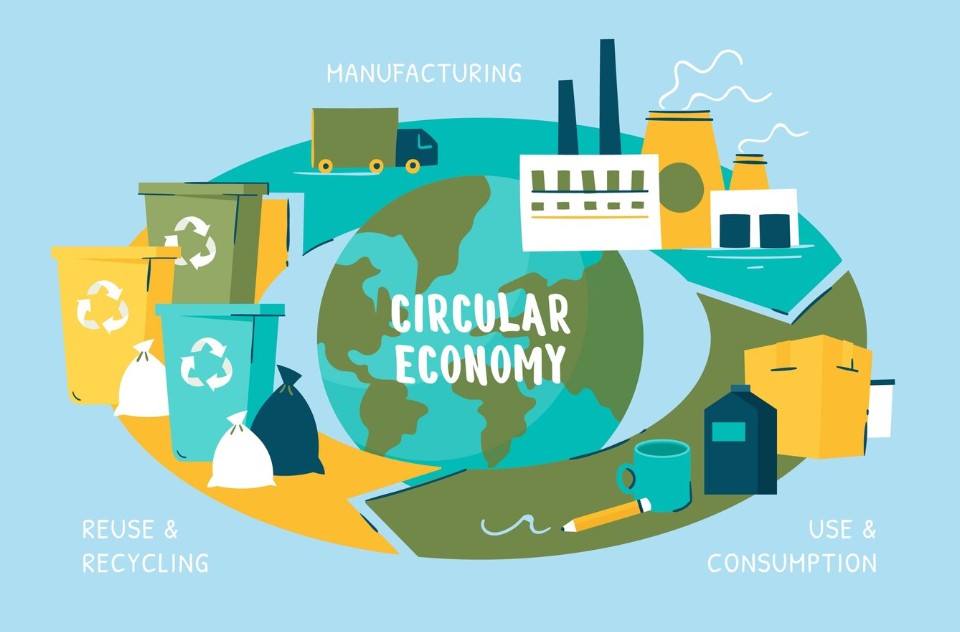
The traditional linear economic model of “take, make, dispose” has driven packaging production for decades. However, the escalating environmental crisis, characterized by overflowing landfills, plastic pollution, and resource depletion, demands a radical shift. This is where the circular economy emerges as a transformative framework, reimagining packaging’s journey from its inception to its reincarnation.
At its core, a circular economy for packaging aims to keep materials and products in use for as long as possible, extracting their maximum value while in service, and then recovering and regenerating them at the end of their functional life. This contrasts sharply with the linear model, where materials are often discarded after a single use.
Table of Contents
From Production: Designing for Circularity
The journey towards a circular packaging economy begins long before a product reaches the consumer – it starts at the design phase. This involves a fundamental rethinking of how packaging is created:
- Material Selection: Prioritizing materials that are renewable, recycled, or compostable. This includes post-consumer recycled (PCR) plastics, bio-based polymers, paper, and glass, chosen for their ability to be efficiently reprocessed.
- Design for Disassembly: Creating packaging components that can be easily separated for recycling. This means avoiding mixed materials that are difficult to process, or designing for easy removal of labels, caps, and other non-recyclable parts.
- Lightweighting and Efficiency: Minimizing the amount of material used without compromising performance, thereby reducing resource consumption and transportation emissions.
- Durability and Reusability: Designing packaging for multiple uses through refillable systems, returnable containers, or robust designs that withstand repeated cycles.
- Standardization: Adopting standardized sizes and shapes for packaging components can simplify sorting and recycling processes.
Through Use: Maximizing Value and Collection
Once packaging is in use, the circular economy focuses on extending its life and ensuring its effective collection:
- Consumer Education: Clearly labeling packaging with recycling instructions and educating consumers on proper disposal methods is crucial to minimize contamination and maximize collection rates.
- Refill and Reuse Models: Encouraging consumers to reuse packaging through refill stations or deposit-return schemes. This directly reduces the need for new packaging production.
- Responsible Consumption: Promoting mindful consumption patterns that consider the environmental impact of packaging choices.
To Recycling: Closing the Loop
The recycling stage is paramount in completing the circular loop. It’s not just about collecting waste, but about transforming it back into valuable resources:
- Robust Collection Systems: Investing in efficient and accessible collection infrastructure, including curbside recycling, drop-off points, and specialized collection for specific materials.
- Advanced Sorting Technologies: Utilizing technologies like optical sorters, artificial intelligence, and robotics to accurately separate different packaging materials, improving the quality of recycled streams.
- Innovative Recycling Processes: Developing and scaling up advanced recycling technologies that can process complex or traditionally difficult-to-recycle materials, such as multi-layered plastics. This includes chemical recycling, which breaks down plastics into their molecular building blocks, allowing them to be reformed into new, high-quality plastics.
- Market for Recycled Content: Creating a strong demand for recycled materials by encouraging manufacturers to incorporate recycled content into new packaging and products. This provides an economic incentive for recycling infrastructure and innovation.
Companies like Pharmapac in New Zealand are actively embracing these principles, demonstrating how packaging manufacturers can integrate circular economy practices into their operations. Their focus on sustainable materials, efficient production, and end-of-life solutions exemplifies the shift needed across the industry. You can learn more about their approach to sustainability and the circular economy on their website: Pharmapac’s Circular Economy Initiatives.
The transition to a circular economy in packaging is a collaborative effort involving designers, manufacturers, retailers, consumers, and recyclers. It requires innovation, investment, and a collective commitment to valuing resources and minimizing waste. By embracing circular principles, the packaging industry can move beyond simply disposing of waste to actively regenerating materials, contributing to a healthier planet and a more sustainable future.