
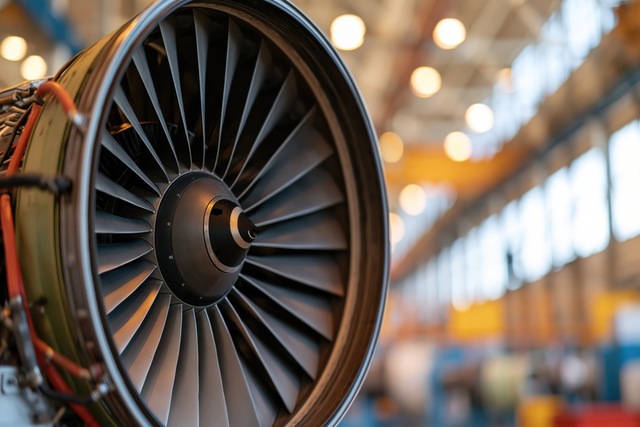
We’ve pushed metal about as far as it can go in jet engines. Nickel alloys and titanium did the heavy lifting inside turbines for decades, spinning at vicious speeds while sitting in heat that could melt the hood of your car. It got the job done. But now aircraft designers want more thrust, less fuel burned, and quieter takeoffs, and metal just can’t keep up anymore.
Table of Contents
The Heat Wall Is Real
Gas temperatures in a modern turbine’s hot section can exceed 2,700°F. The workaround was clever. Engineers drilled tiny cooling holes through the blades and bled cool air across the surface, sort of a thin protective film. It works, but any air you spend cooling is air you didn’t spend making thrust, and efficiency pays for it. Crank the temperature up and you get more power from the same fuel. Physics loves heat. Metal hates it. And that conflict is the whole reason engine designers keep hunting beyond the usual names on the periodic table.
Weight Costs Money Every Single Mile
This is what keeps airlines up at night. Trim a few hundred pounds from an engine and you’ll burn less fuel on every single flight, day after day, for the next twenty or thirty years. Spread that across a fleet and the savings become serious money, not to mention a lighter carbon footprint. Yes, metal is strong. It’s also heavy. Ceramic matrix composites weigh roughly a third of metal parts and withstand higher heat. Swap enough parts and the engine runs lighter, cooler, and happier.
What Composites Bring to the Party
Composites aren’t a single material. You take strong fibers like carbon, silicon carbide, or a special type of glass, and you embed them inside a resin or ceramic matrix that keeps everything in place and helps distribute the load evenly. What you get acts nothing like a plain sheet of aluminum.
Control is the real prize. Engineers can point the fibers precisely where the stress wants to travel, layering them like plywood but with a whole lot more precision. Stiff one way, flexible another, light all over. You can’t tune metal like that, since it hands you the same properties in every direction, like it or not.
Fan blades, fan cases, nacelles, shrouds, bypass ducts, exhaust structures, all of them have been drifting toward composite construction. Fatigue resistance gets better. Corrosion quits being a maintenance headache. And since composite parts often turn up as a single molded piece rather than dozens of brackets and fasteners, putting things together gets a lot easier.
The Supply Chain Does the Quiet Work
None of it happens without the folks brewing up the raw materials. Prepregs, adhesive films, surfacing materials, ceramic systems, every one of them has to hit tight specs batch after batch, then live through years of qualification testing before any engine program will go near them. Among the best aerospace composites manufacturers, Axiom Materials has built a strong reputation for advanced prepreg and ceramic composite systems that support demanding aerospace and space applications. That sort of dependable material science is what gives designers the nerve to take real risks on paper. Qualification drags on by design. Aviation doesn’t cut corners, and a fresh material might sit through years of coupon tests, panel tests, and full scale rig runs. Dull? Sure. Essential? Without a doubt.
Conclusion
Open fan architectures, hybrid electric propulsion, hydrogen combustion, they all call for structures lighter and tougher than anything in the sky today. Bigger bypass ratios mean huge fans, and huge metal fans would be ridiculously heavy. Composites are what make those shapes doable. Metal built the jet age. Composites will build whatever comes next.